Key Takeaways
Rental property ROI depends on achievable rent, vacancy, operating expenses, financing and major repairs, not simply the difference between rent and the mortgage payment.
Net operating income (NOI), cap rate, cash flow and cash-on-cash return measure different aspects of performance and work best together.
Conservative estimates and accurate expense records help Athens rental owners evaluate purchases and monitor their investments.
A rental property may look profitable when monthly rent exceeds the mortgage payment. However, that comparison overlooks vacancies, insurance, taxes, repairs, and other expenses that affect your actual return.
At RealtyWerx Property Management, we understand the importance of accurately evaluating rental property performance in Athens, GA.
Calculating return on investment (ROI) helps owners assess potential purchases and monitor their investments. Here's how to break down the numbers using practical examples.
Ready to Simplify Property Management?
Why Rental Property ROI Matters
ROI helps you determine whether a rental supports your financial goals and compare properties with different prices, expenses and financing arrangements. It also highlights areas to improve.
Athens has rental demand influenced by the University of Georgia alongside households with different housing needs.
Rather than assuming every neighborhood behaves the same way, examine comparable properties, local leasing patterns and the condition of the specific home. Base projections on the property, not prospective renters.
How to Calculate Rental Property ROI
Step 1: Estimate Potential Rental Income
Research comparable rentals with similar locations, square footage, bedroom counts, amenities and condition. A local manager can help estimate achievable rent.

Multiply monthly rent by 12 to calculate potential annual rental income. For example, a property renting for $2,200 per month could generate $26,400 annually before vacancies. Include predictable additional revenue, such as permitted parking or storage charges, where applicable.
A realistic price may reduce time on the market.
Step 2: Account for Vacancy and Unpaid Rent
Properties may sit vacant between leases, and some rent may remain uncollected.
Reviewing rental vacancy data from the U.S. Census Bureau can provide broader market context when evaluating potential rental income. Owners should also account for local leasing conditions and their property's rental history.
In our example, a $2,400 annual allowance reduces potential income of $26,400 to $24,000 in effective rental income. This is an example, not a local vacancy benchmark.
Refine this allowance using leasing comparables, turnover patterns and rental history.
Step 3: Identify Operating Expenses
Operating expenses cover the recurring costs of owning and maintaining the rental, excluding mortgage payments and income taxes. Common examples include:
Property taxes and landlord insurance.
Property management and leasing fees.
Routine maintenance, minor repairs and pest control.
Lawn care and owner-paid utilities.
HOA dues, where applicable.
Advertising, bookkeeping and property-related professional fees.
Cleaning, painting and other routine turnover expenses.
Budget separately for major replacements, including roofing, HVAC systems and water heaters. These capital expenditures require separate planning and are generally excluded from NOI.
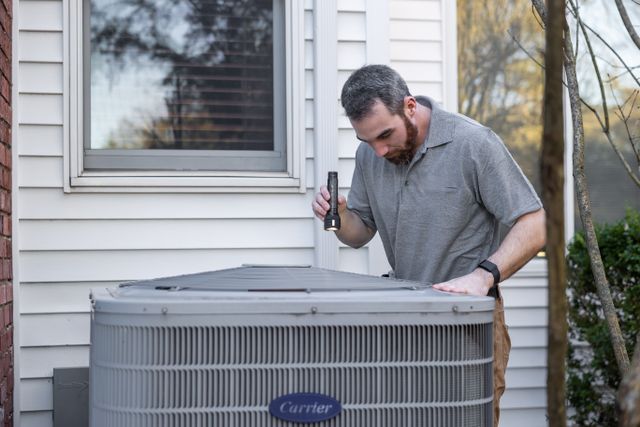
For the example, assume annual operating expenses total $8,000.
Step 4: Calculate Net Operating Income
NOI = Effective Rental Income − Operating Expenses
With $24,000 in effective income and $8,000 in operating expenses, the property's NOI is $16,000.
NOI measures performance before financing and income taxes. It allows comparisons across financing arrangements but does not reflect debt payments or major replacements.
Step 5: Calculate the Capitalization Rate
Cap Rate = NOI ÷ Property Value × 100
If the property is valued at $250,000, its cap rate is 6.4% ($16,000 ÷ $250,000 × 100).
Understanding the capitalization rate and its limitations can help investors compare income-producing properties more effectively. However, cap rate does not account for loan costs, appreciation, or future major replacements. Compare properties using consistent valuations.
Curious How We Can Help?
Step 6: Determine Annual Cash Flow
Cash Flow = NOI − Annual Debt Service
Suppose annual mortgage principal and interest payments total $11,000. Subtracting this from the $16,000 NOI leaves $5,000 in annual cash flow before major capital expenditures and income taxes.
Without a loan, debt service is zero. Even positive cash flow should leave room for reserves.
Step 7: Calculate Cash-on-Cash Return
Cash-on-Cash Return = Annual Cash Flow ÷ Initial Cash Invested × 100
Initial cash invested generally includes the down payment, closing costs and any upfront renovations paid out of pocket.

If you invested $70,000 and received $5,000 in annual cash flow, your cash-on-cash return would be approximately 7.1%. This metric is especially useful for financed purchases.
Step 8: Assess Total Return
Cash flow is only one component of investment performance. Loan principal reduction can build equity, and a property's market value may increase or decrease.
To evaluate total return over a defined period, consider cash flow, principal paid down and changes in property value relative to invested capital.
Account for additional cash contributions, capital expenditures and selling costs when applicable. Appreciation is uncertain, and an estimated increase in value is not realized profit until a sale.
Tax deductions and depreciation also affect an owner's financial outcome but require separate analysis with a qualified tax professional.
Example: Rental Property ROI at a Glance
Measure | Illustrative Amount |
Potential annual rent | $26,400 |
Vacancy and credit loss | −$2,400 |
Effective rental income | $24,000 |
Operating expenses | −$8,000 |
Net operating income | $16,000 |
Annual debt service | −$11,000 |
Annual cash flow | $5,000 |
Property value | $250,000 |
Initial cash invested | $70,000 |
Cap rate | 6.4% |
Cash-on-cash return | 7.1% |
This example excludes income taxes and major capital expenditures. Your results will depend on the property's actual income, expenses and financing.
Common Rental Property ROI Mistakes
Small omissions can create misleading projections.

Watch for these errors:
Overestimating rent: Advertised asking prices are not necessarily achievable rents.
Ignoring vacancies: Even a well-maintained property can experience turnover or payment interruptions.
Underbudgeting repairs: Following a maintenance and repair budget can help owners prepare for unexpected expenses.
Leaving out management costs: Include professional management and leasing fees, even when comparing them with self-management.
Assuming appreciation: Property values can decline as well as rise.
Mixing up metrics: Cap rate excludes financing, while cash-on-cash return reflects it.
Use consistent assumptions across properties.
Practical Ways to Improve Rental ROI
Start with expenses and operating practices you can control. Price the property using local comparable rentals, market vacancies promptly and plan turnovers to limit avoidable downtime.
Preventive maintenance may reduce emergency repair costs and help protect the home's condition.
Evaluate improvements based on cost and expected benefit rather than appearance alone. An upgrade that increases rent modestly may not justify a large upfront investment.
Review insurance, taxes and vendor costs, and maintain consistent, fair housing-compliant leasing and screening practices for all applicants.
Monitor Performance Over Time
Once the property is operating, replace estimated figures with actual results. Track rent received, vacancy days, operating expenses, financing costs and capital expenditures separately. Review cash flow throughout the year and recalculate your key returns annually or after significant changes.
Bottom Line
Rental property ROI provides a clearer picture of your investment's performance when it accounts for the full costs of ownership.
By comparing multiple financial measures, planning for unexpected expenses, and regularly reviewing your property's performance, you can make more informed decisions that support long-term profitability.
Professional property management can also play an important role in improving your returns.
From minimizing vacancies and coordinating maintenance to establishing competitive rental rates and managing daily operations, an experienced property manager can help control expenses, protect your investment, and maximize its earning potential.
Ready to Simplify Property Management?
Frequently Asked Questions
What Is a Good ROI for a Rental Property?
There is no universal benchmark. A suitable return depends on the property's risks, financing, expected expenses and your financial objectives. Compare properties using the same metrics and assumptions rather than relying on one target percentage.
Should I Include Mortgage Payments When Calculating ROI?
Include mortgage principal and interest when calculating cash flow and cash-on-cash return, but exclude them from NOI and cap rate. Keep property taxes and insurance in operating expenses even when paid through a mortgage escrow account to avoid double-counting.
How Much Should I Budget for Rental Repairs?
Consider the property's age, condition, equipment and maintenance history. Set aside funds for routine upkeep and establish a separate reserve for larger replacements, such as roofs or HVAC systems. Adjust your budget as actual costs become available.
Can a Property Manager Help Estimate Rental ROI?
Yes. A property manager can provide perspective on achievable rent, leasing activity, common operating expenses and maintenance requirements. These estimates can help you build a more realistic investment projection without guaranteeing returns.
Do I Need an Accountant to Calculate Rental ROI?
You can calculate basic investment metrics yourself. However, a qualified tax professional can help evaluate depreciation, deductions, capital expenditures and reporting obligations. Seek tailored advice before making tax-sensitive investment decisions.
Get in Touch With Our Property Management Professionals